Sōma, Fukushima
Sōma .mw-parser-output .noboldfont-weight:normal 相馬市 | |||
|---|---|---|---|
City | |||
| |||
 Location of Sōma in Fukushima Prefecture | |||
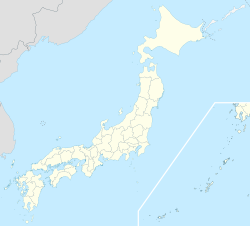  Sōma | |||
| Coordinates: 37°47′48″N 140°55′10.7″E / 37.79667°N 140.919639°E / 37.79667; 140.919639Coordinates: 37°47′48″N 140°55′10.7″E / 37.79667°N 140.919639°E / 37.79667; 140.919639 | |||
| Country | Japan | ||
| Region | Tōhoku | ||
| Prefecture | Fukushima Prefecture | ||
| Government | |||
| • Mayor | Hidekiyo Tachiya | ||
| Area | |||
| • Total | 197.79 km2 (76.37 sq mi) | ||
| Population (October 2017) | |||
| • Total | 35,592 | ||
| • Density | 179/km2 (460/sq mi) | ||
| Time zone | UTC+9 (Japan Standard Time) | ||
| Symbols | |||
| • Tree | Japanese black pine | ||
| • Flowers | Spring: sakura Summer: rugosa rose Autumn: balloon flower Winter: sazanka | ||
| • Bird | Japanese bush warbler | ||
| Phone number | 0244-37-2117 | ||
| Address | 13 Nakamura Ōtesaki, Sōma-shi, Fukushima-ken 976-8601 | ||
| Website | http://www.city.soma.fukushima.jp/ | ||


Sōma City Hall
Sōma (相馬市, Sōma-shi) is a city located in Fukushima Prefecture, Japan. As of 1 October 2017[update], the city had an estimated population of 35,592, and a population density of 179 persons per km2 in 14,358 households.[1] The total area of the city is 197.79 square kilometres (76.37 sq mi).
Contents
1 Geography
1.1 Neighboring municipalities
2 Climate
3 Demographics
4 History
4.1 2011 earthquake and tsunami
5 Government
6 Economy
7 Education
8 Hospital
9 Transportation
9.1 Railway
9.2 Highway
9.3 Seaports
10 Local attractions
11 Noted people from Sōma
12 References
13 Further reading
14 External links
Geography
Sōma is located in northeastern Fukushima Prefecture, bordered by the Pacific Ocean to the east and the Abukuma Plateau to the west. Sōma is closer to Sendai in Miyagi Prefecture than it is to the prefectural capital of Fukushima.
- Mountains
- Ryozan (825m)
- Rivers
- Uda River
- Coastal features
- Matsukawa Lagoon
Neighboring municipalities
- Fukushima Prefecture
- Minamisōma
- Iitate
- Date
- Shinchi
- Miyagi Prefecture
- Marumori
Climate
Sōma has a humid climate (Köppen climate classification Cfa) characterized by mild summers and cold winters with heavy snowfall. The average annual temperature in Sōma is 12.6 °C. The average annual rainfall is 1260 mm with September as the wettest month.The temperatures are highest on average in August, at around 24.8 °C, and lowest in January, at around 1.8 °C.[2]
Demographics
Per Japanese census data,[3] the population of Sōma has remained the same over the past 40 years.
| Census Year | Population |
|---|---|
| 1970 | 37,189 |
| 1980 | 37,332 |
| 1990 | 39,134 |
| 2000 | 38,842 |
| 2010 | 37,817 |
History
The area of present-day Sōma was part of ancient Mutsu Province, and has been settled since at least the Jōmon period. During the Edo period, the area developed as the castle town of Sōma Domain, home of the Sōma clan from the Kamakura period until the Boshin War. After the Meiji Restoration, it was organized as part of Iwaki Province. With the establishment of the municipalities system on April 1, 1896, the area was organized into a number of towns and villages within the districts of Namekata and Uda. In 1896, Namekata and Uda were merged to create Sōma District. The town of Nakamura was established on April 1, 1889. Nakamura was merged with seven neighbouring villages and raised to city status on March 31, 1954, becoming the city of Sōma.
2011 earthquake and tsunami
The eastern, coastal portion of Sōma was inundated by tsunami flood waters following the magnitude 9.0 2011 Tōhoku earthquake and tsunami off its coastline on March 11, 2011.[4] The tsunami reached up to approximately 4 km inland in Sōma, flooded areas included Sōma Port and the Matsukawa-ura Bay area, up to the elevated Route 6 Sōma Bypass.[5] The tsunami was measured to have been 9.3 meters or higher in Sōma.[6]
Sōma is about 45 kilometres (28 miles) north of Fukushima Daiichi Nuclear Power Plant, the site of the nuclear accident that followed the tsunami, and was thus not subject to mandatory evacuation.[7].
Government
Sōma has a mayor-council form of government with a directly elected mayor and a unicameral city legislature of 20 members.[8]
Economy
Sōma has a mixed economy, based on agriculture, commercial fishing and light manufacturing. The area is noted for its strawberry cultivation.
Education
Sōma has nine public elementary schools and four public junior high schools operated by the city and two public high schools operated by the Fukushima Prefectural Board of Education. The prefecture also operates one special education school.
Hospital
Soma General Hospital, a public hospital with 240 beds, is located in Sōma.
Transportation
Railway
JR East – Jōban Line
Nittaki - Soma
Highway
Jōban Expressway – Soma IC- Japan National Route 6
- Japan National Route 115
- Japan National Route 116
Seaports
- Port of Soma
Local attractions
- The Sōma horse-chasing Festival held on July 23 to 25 every year is a designated an Important Intangible Folk Cultural Property.[9]
Sōma Nakamura Castle ruins- Sōma Nakamura Shrine
- Matsukawaura Prefectural Natural Park
Noted people from Sōma
Tochiazuma Tomoyori – sumo wrestler
Takahiro Suzuki – professional baseball player
References
^ Sōma city official home page(in Japanese)
^ Sōma climate data
^ Sōma population statistics
^ Kyodo News, "Survivors in trauma after life-changing nightmare day", The Japan Times, 13 March 2011, p. 2.
^ NHK, TV News Broadcast, 13 March 2011.
^ http://www.jma.go.jp/en/tsunami/observation_2_04_20110313180559.html JMA tsunami observation data.
^ Fukushima evacuation orders and restricted areas]
^ Sōma City Council membership list(in Japanese)
^ [1] Agency for Cultural Affairs (in Japanese)
Further reading
Sasaki, Takashi (2013). Fukushima: vivir el desastre (in Spanish). Translated by F. Javier de Esteban Baquedano. Gijón, Spain: Satori Ediciones. ISBN 978-84-941125-3-9..mw-parser-output cite.citationfont-style:inherit.mw-parser-output qquotes:"""""""'""'".mw-parser-output code.cs1-codecolor:inherit;background:inherit;border:inherit;padding:inherit.mw-parser-output .cs1-lock-free abackground:url("//upload.wikimedia.org/wikipedia/commons/thumb/6/65/Lock-green.svg/9px-Lock-green.svg.png")no-repeat;background-position:right .1em center.mw-parser-output .cs1-lock-limited a,.mw-parser-output .cs1-lock-registration abackground:url("//upload.wikimedia.org/wikipedia/commons/thumb/d/d6/Lock-gray-alt-2.svg/9px-Lock-gray-alt-2.svg.png")no-repeat;background-position:right .1em center.mw-parser-output .cs1-lock-subscription abackground:url("//upload.wikimedia.org/wikipedia/commons/thumb/a/aa/Lock-red-alt-2.svg/9px-Lock-red-alt-2.svg.png")no-repeat;background-position:right .1em center.mw-parser-output .cs1-subscription,.mw-parser-output .cs1-registrationcolor:#555.mw-parser-output .cs1-subscription span,.mw-parser-output .cs1-registration spanborder-bottom:1px dotted;cursor:help.mw-parser-output .cs1-hidden-errordisplay:none;font-size:100%.mw-parser-output .cs1-visible-errorfont-size:100%.mw-parser-output .cs1-subscription,.mw-parser-output .cs1-registration,.mw-parser-output .cs1-formatfont-size:95%.mw-parser-output .cs1-kern-left,.mw-parser-output .cs1-kern-wl-leftpadding-left:0.2em.mw-parser-output .cs1-kern-right,.mw-parser-output .cs1-kern-wl-rightpadding-right:0.2em
External links
 | Wikimedia Commons has media related to Soma, Fukushima. |
Official Website (in Japanese)
 Fukushima Prefecture Fukushima Prefecture | ||
|---|---|---|
Fukushima (capital) | ||
| Core cities |
|  |
| Cities |
| |
| Districts |
| |
List of mergers in Fukushima Prefecture
| ||
2011 Tōhoku earthquake and tsunami | |||||||||||||||
|---|---|---|---|---|---|---|---|---|---|---|---|---|---|---|---|
| |||||||||||||||
| Geology |
| ||||||||||||||
| Affected areas |
| ||||||||||||||
| Affected infrastructure |
| ||||||||||||||
| Nuclear Accidents and Incidents |
| ||||||||||||||
| Foreshocks, Aftershocks |
| ||||||||||||||
| People |
| ||||||||||||||
| Relief and Recovery |
| ||||||||||||||
| Media |
| ||||||||||||||
| Other |
| ||||||||||||||
| |||||||||||||||
 Japanese earthquakes
 Authority control  |
|
|---|


