Totonicapán Department
Totonicapán | |||
|---|---|---|---|
Department | |||
| |||
 Totonicapán | |||
| Coordinates: 14°54′45″N 91°21′36″W / 14.91250°N 91.36000°W / 14.91250; -91.36000Coordinates: 14°54′45″N 91°21′36″W / 14.91250°N 91.36000°W / 14.91250; -91.36000 | |||
| Country |  Guatemala Guatemala | ||
| Department | Totonicapán | ||
| Capital | Totonicapán | ||
| Municipalities | 8 | ||
| Government | |||
| • Type | Departmental | ||
| Area | |||
| • Department | 1,061 km2 (410 sq mi) | ||
| Population (2013)[1] | |||
| • Department | 506,537 | ||
| • Density | 480/km2 (1,200/sq mi) | ||
| • Urban | 241,112 | ||
| • Ethnicities | K'iche' people, Ladino | ||
| • Religions | Roman Catholicism, Evangelicalism, Maya | ||
| Time zone | -6 | ||
| ISO 3166 code | GT-TO | ||
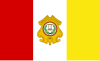

Totonicapán is one of the 22 departments of Guatemala. The capital is the city of Totonicapán.
Contents
1 History
2 Geography
3 Demographics
3.1 Population
3.2 Ethnicity
3.3 Language
4 Government
4.1 Municipalities
5 Economy
6 Transportation
7 References
History
Historical chronicler Francisco Antonio de Fuentes y Guzmán, described the municipalities of Totonicapán in his 1689 “Recordación Florida.” This record confirms the area's pre-Columbian origins.
In July, 1820, the indigenous residents of Totonicapán revolted against the government in response to excessive tributes imposed by the Spanish King Ferdinand VII. The rebellion was led by Atanasio Tzul and Lucas Aguilar. After toppling the local government, Tzul declared himself king of the breakaway province, with Aguilar as president. The mayor of neighboring Quetzaltenango, Prudencio Cózar, along with hundreds of armed men, led an invasion to put down the rebellion. The rebel government lasted about 20 days. The rebels were captured, whipped, and imprisoned.
The rebellion is widely celebrated in Guatemala as the opening volley in the independence struggle, though more recent scholarship on the rebellion has suggested that its leaders were less concerned with breaking from the Spanish Crown than they were concerned with the unfair demands of the American born Spanish elite, or criollos.
Geography
Totonicapán has an area of 1.061 km² located in the western highlands. Its territory is crossed by ramifications of the Sierra Madre, and includes mountains as Cuxniquel, Campanabaj, and Cerro de Coxóm.
Important rivers in Totonicapaán include the Samalá, Pachac, Las Palmeras, Sajcocolaj, Patzotzil, Huacol and Pajá.
The department is widely recognized in Central America for its extensive highland oak-pine forests with also fir and cypress stands, these hold some of the largest stands of the threatened Guatemalan fir, Abies guatemalensis, known locally as the pinabete. The forests cover extensive portions of the Sierra Madre, especially in the municipios of San Francisco el Alto and Totonicapán, and are held in a variety of communal arrangements, including village, clan (parcialidad) and municipio-wide ownership.
Demographics
Population
The National Institute of Statistics of Guatemala estimated the population of Totonicapán to be 506,537 in 2013, making it rank 11th in size out of Guatemala's 22 departments.
The male/female ratio of the department is 47.7/52.3, and as is true for Guatemala as a whole, Totonicapán has a relatively young population, with a median age of 16 (nationally it is only 17).[1]
Ethnicity
Approximately 97% of the population of Totonicapán identify as indigenous (primarily K'iche' Maya), compared to only about 40% nationwide. The remaining 3% identifying as non-indigenous are primarily Ladino.[1]
Language
Many of the Mayan inhabitants of Totonicapán speak K'iche', though Spanish is also used throughout the department.[2]
Government
Municipalities
- Momostenango
- San Andrés Xecul
- San Bartolo
- San Cristóbal Totonicapán
- San Francisco El Alto
- Santa Lucía La Reforma
- Santa María Chiquimula
- Totonicapán
Economy
As of 1850, the department produced wheat, maize, sugar, fruits, and vegetables. Livestock is raised the area.[2]
Transportation
Cuatro Caminos ("four roads") is a well-known intersection of roads that go to Quetzaltenango, Guatemala City, Huehuetenango and Totonicapán.
References
^ abc "Caracterización departamental: Totonicapán 2013" (PDF). Caracterización departamental: Totonicapán 2013. Instituto Nacional de Estadística (INE). 2014. Retrieved 1 August 2015..mw-parser-output cite.citationfont-style:inherit.mw-parser-output qquotes:"""""""'""'".mw-parser-output code.cs1-codecolor:inherit;background:inherit;border:inherit;padding:inherit.mw-parser-output .cs1-lock-free abackground:url("//upload.wikimedia.org/wikipedia/commons/thumb/6/65/Lock-green.svg/9px-Lock-green.svg.png")no-repeat;background-position:right .1em center.mw-parser-output .cs1-lock-limited a,.mw-parser-output .cs1-lock-registration abackground:url("//upload.wikimedia.org/wikipedia/commons/thumb/d/d6/Lock-gray-alt-2.svg/9px-Lock-gray-alt-2.svg.png")no-repeat;background-position:right .1em center.mw-parser-output .cs1-lock-subscription abackground:url("//upload.wikimedia.org/wikipedia/commons/thumb/a/aa/Lock-red-alt-2.svg/9px-Lock-red-alt-2.svg.png")no-repeat;background-position:right .1em center.mw-parser-output .cs1-subscription,.mw-parser-output .cs1-registrationcolor:#555.mw-parser-output .cs1-subscription span,.mw-parser-output .cs1-registration spanborder-bottom:1px dotted;cursor:help.mw-parser-output .cs1-hidden-errordisplay:none;font-size:100%.mw-parser-output .cs1-visible-errorfont-size:100%.mw-parser-output .cs1-subscription,.mw-parser-output .cs1-registration,.mw-parser-output .cs1-formatfont-size:95%.mw-parser-output .cs1-kern-left,.mw-parser-output .cs1-kern-wl-leftpadding-left:0.2em.mw-parser-output .cs1-kern-right,.mw-parser-output .cs1-kern-wl-rightpadding-right:0.2em
^ ab Baily, John (1850). Central America; Describing Each of the States of Guatemala, Honduras, Salvador, Nicaragua, and Costa Rica. London: Trelawney Saunders. p. 85.
Departments of Guatemala | ||
|---|---|---|
|  | |


