Post-Soviet states Post-Soviet states in English alphabetical order: ArmeniaAzerbaijanBelarusEstoniaGeorgiaKazakhstanKyrgyzstanLatviaLithuaniaMoldovaRussiaTajikistanTurkmenistanUkraineUzbekistan The post-Soviet states, also collectively known as the former Soviet Union (FSU)[1] or former Soviet Republics, and in Russian as the "near abroad" (discussed below) are the states that emerged and re-emerged from the Union of Soviet Socialist Republics in its breakup in 1991, with Russia internationally recognised as the successor state to the Soviet Union after the Cold War. The three Baltic states were the first to declare their independence, between March and May 1990, claiming continuity from the original states that existed prior to their annexation by the Soviet Union in 1940.[2][3] The remaining 12 republics all subsequently seceded.[2] 12 of the 15 states, excluding the Baltic states, initially formed the CIS and most joined CSTO, while the Baltic states focused on European Union and NATO membership.Several disputed states with varying degrees of recognition exist within the territory of the former Soviet Union: Transnistria in eastern Moldova, Abkhazia and South Ossetia in northern Georgia and Nagorno-Karabakh in southwestern Azerbaijan. Since 2014, the Donetsk People's Republic and Luhansk People's Republic in Eastern Ukraine have claimed independence. All of these unrecognised states except Nagorno-Karabakh depend on Russian armed support and financial aid. Nagorno-Karabakh is integrated to Armenia, which also maintains close cooperation with Russia. Prior to the annexation of Crimea to Russia in March 2014, which is not recognized by most countries, it briefly declared itself an independent state.In the political language of Russia and some other post-Soviet states, the near abroad refers to the newly independent republics (other than Russia itself) which emerged after the dissolution of the Soviet Union. Near abroad became more widely used in English, usually to assert Russia's right to have major influence in the region.[4][5][6]Russian President Vladimir Putin has declared the region Russia's "sphere of influence", and strategically vital for Russia.[6] The concept has been compared to the Monroe Doctrine.[4]Contents1 Country comparison1.1 States and geographical groupings1.2 General statistics1.3 Current leaders1.3.1 Heads of state1.3.2 Heads of government2 Economy3 Developmental progress4 Regional organizations4.1 Commonwealth of Independent States4.2 Eurasian Economic Community4.3 Customs Union of Belarus, Kazakhstan and Russia4.4 Eurasian Economic Union4.5 Collective Security Treaty Organization4.6 North Atlantic Treaty Organization4.7 GUAM4.8 Union of Russia and Belarus5 Other regional organizations5.1 Economic Cooperation Organization5.2 Community for Democracy and Rights of Nations5.3 Community of Democratic Choice5.4 Shanghai Cooperation Organisation5.5 Economic cooperation organizations5.6 Political integration and security alliances5.6.1 Organizations in other domains5.7 Other organizations6 Politics6.1 Separatist conflicts6.1.1 Current declared states6.1.2 Former declared states6.2 Civil wars6.3 Colour revolutions6.4 Russian population in post-Soviet states6.5 Religion6.6 LGBT rights6.7 Environment6.7.1 Russia6.7.2 Ukraine6.7.3 Central Asia6.7.4 Baltic States6.7.4.1 Estonia6.7.4.2 Latvia6.7.4.3 Lithuania7 Post-Soviet nostalgia8 See also9 References10 External linksCountry comparisonStates and geographical groupingsCommon groupings of the post-Soviet states: Baltic states Eastern Europe Russia Transcaucasia Central AsiaThe 15 post-Soviet states are typically divided into the following five groupings. Each of these regions has its own common set of traits, owing not only to geographic and cultural factors but also to that region's history in relation to Russia. In addition, there are a number of de facto independent, but internationally unrecognized states (see the section Separatist conflicts below).Baltic states Estonia Latvia LithuaniaCentral Asia Kazakhstan Kyrgyzstan Tajikistan Turkmenistan UzbekistanEastern Europe Belarus Moldova UkraineEurasia RussiaTranscaucasia Armenia Azerbaijan GeorgiaGeneral statisticsCountryCoat of armsFlagCapitalIndependenceArea (km²)Area (mi²)PopulationDensity(pop./km²)Density(pop./mi²)DatePopulation sourceRussia(The Russian Federation)Moscow1991-12-12[7]17,098,2426,601,668146,880,4328.5922.2January 1, 2018Official estimateUkraine[8]Kiev1991-08-24603,628233,06245,377,58175194April 1, 2014Monthly official estimateBelarus(Republic of Belarus)Minsk1991-08-25207,60080,1559,765,46946119July 1, 2014Quarterly official estimateUzbekistan(Republic of Uzbekistan)Tashkent1991-08-31444,103171,46930,492,80069179January 1, 2014Official estimateKazakhstan(Republic of Kazakhstan)Astana1991-12-162,724,9001,052,09017,186,0006.3116February 1, 2014Monthly official estimateGeorgiaTbilisi1991-04-0969,70026,9114,490,50064166January 1, 2014Official estimateAzerbaijan(Republic of Azerbaijan)Baku1991-08-3086,60033,4369,477,100109282December 31, 2013Official estimateLithuania(Republic of Lithuania)Vilnius1918-02-16 (current)1990-03-11 (restored)65,30025,2122,944,45945117January 1, 2014Monthly official estimateMoldova(Republic of Moldova)Chișinău1991-08-2733,84313,0673,550,900105272January 1, 2017Official estimateLatvia(Republic of Latvia)Riga1918-11-18 (current)1991-08-21 (restored)64,56224,9282,005,2003180January 1, 2014Monthly official estimateKyrgyzstan(Kyrgyz Republic)Bishkek1991-08-31199,94577,1995,895,10029.5762015Official estimateTajikistan(Republic of Tajikistan)Dushanbe1991-09-09143,10055,2518,160,00057148January 1, 2014Official estimateArmenia(Republic of Armenia)Yerevan1991-09-2129,74311,4843,024,1001022642012Official estimateTurkmenistanAshgabat1991-10-27491,210189,6575,240,00010.727.7July 1, 2013UN estimateEstonia(Republic of Estonia)Tallinn1918-02-24 (current)1991-08-20 (restored)45,33917,5051,313,2712975January 1, 2015Official estimate Total overall of the former USSRMoscow1991-12-2622,307,8158,613,096292,610,73413.134Various DatesVarious SourcesArea includes land and water.Current leadersHeads of state RussiaVladimir PutinPresident of Russia UkrainePetro PoroshenkoPresident of Ukraine BelarusAlexander LukashenkoPresident of Belarus UzbekistanShavkat MirziyoyevPresident of Uzbekistan KazakhstanKassym-Jomart TokayevPresident of Kazakhstan GeorgiaSalome ZourabichviliPresident of Georgia AzerbaijanIlham AliyevPresident of Azerbaijan LithuaniaDalia GrybauskaitėPresident of Lithuania MoldovaIgor DodonPresident of Moldova LatviaRaimonds VējonisPresident of Latvia KyrgyzstanSooronbay JeenbekovPresident of Kyrgyzstan TajikistanEmomali RahmonPresident of Tajikistan ArmeniaArmen SarkissianPresident of Armenia TurkmenistanGurbanguly BerdimuhamedowPresident of Turkmenistan[9] EstoniaKersti KaljulaidPresident of Estonia Heads of government RussiaDmitry MedvedevPrime Minister of Russia UkraineVolodymyr GroysmanPrime Minister of Ukraine BelarusSyarhey RumasPrime Minister of Belarus UzbekistanAbdulla AripovPrime Minister of Uzbekistan KazakhstanAskar MaminPrime Minister of Kazakhstan GeorgiaMamuka BakhtadzePrime Minister of Georgia AzerbaijanNovruz MammadovPrime Minister of Azerbaijan LithuaniaSaulius SkvernelisPrime Minister of Lithuania MoldovaPavel FilipPrime Minister of Moldova LatviaKrišjānis KariņšPrime Minister of Latvia KyrgyzstanMukhammedkalyi AbylgazievPrime Minister of Kyrgyzstan TajikistanKokhir RasulzodaPrime Minister of Tajikistan ArmeniaNikol PashinyanPrime Minister of Armenia TurkmenistanGurbanguly BerdimuhamedowPresident of Turkmenistan[9] EstoniaJüri RatasPrime Minister of Estonia EconomyThe dissolution of the Soviet Union took place as a result and against the backdrop of general economic stagnation, even regression. As the Gosplan, which had set up production chains to cross SSR lines, broke down, the inter-republic economic connections were also disrupted, leading to even more serious breakdown of the post-Soviet economies.Most of the formerly Soviet states began the transition to a market economy from a command economy in 1990-1991 and made efforts to rebuild and restructure their economic systems, with varying results. In all, the process triggered severe economic declines, with Gross Domestic Product (GDP) dropping by more than 40% overall between 1990 and 1995.[10] This decline in GDP was much more intense than the 27% decline that the United States suffered in the wake of the Great Depression between 1930 and 1934.[11] The reconfiguration of public finance in compliance with capitalist principles resulted in dramatically reduced spending on health, education and other social programs, leading to a sharp increase in poverty and economic inequality.[12][13] The economic shocks associated with wholesale privatization resulted in the excess deaths of roughly 1 million working age individuals throughout the former Soviet bloc in the 1990s.[14][15] A study by economist Steven Rosefielde asserts that 3.4 million Russians died premature deaths from 1990 to 1998, partly as the result of "shock therapy" imposed by the Washington Consensus.[16]The initial transition decline was eventually arrested by the cumulative effect of market reforms, and after 1995 the economy in the post-Soviet states began to recover, with GDP switching from negative to positive growth rates. By 2007, 10 of the 15 post-Soviet states had recovered and reached GDP greater than what they had in 1991.[17] Only Moldova, Ukraine, Georgia, Kyrgyzstan, and Tajikistan had GDP significantly below the 1991 level. The recovery in Russia was marginal, with GDP in 2006-2007 just nudging above the 1991 level. Combined with the aftershocks of the 1998 economic crisis it led to a return of more interventionist economic policies by Vladimir Putin's administration.[citation needed] Some academic studies show that many former Soviet Republics and Warsaw Pact countries still have not caught up to their levels of output during the twilight of the Soviet era.[18][19]Change in Gross Domestic Product (GDP) in constant prices, 1991-2015[20]Country1991*19962001200620112015Turnaround year**Eastern European statesRussia10063.174.5103.3118.3119.81997Ukraine10047.251.873.775.963.42000Belarus10067.994.0141.5192.5193.91996Moldova10045.245.062.574.583.21997Baltic statesEstonia100??????Latvia10067.892.9143.1130.1145.81993Lithuania10064.681.5119.8123.9139.61995Central AsiaKazakhstan10069.388.5141.4185.7219.01996Kyrgyzstan10058.976.189.6114.4133.91996Tajikistan10034.145.256.098.1124.51997Turkmenistan10068.4107.7215.5351.8515.51998Uzbekistan10082.9102.6137.5208.4281.21996TranscaucasusArmenia10063.384.2154.7172.5202.61994Azerbaijan10042.765.2150.2241.1276.51996Georgia10039.849.874.193.2109.31995*Economy of most Soviet republics started to decline in 1989-1990, thus indices for 1991 don't match pre-reform maximums.**The year when GDP decline switched to GDP growth.List of the present Gross domestic product (GDP) (figures are given in 2019 United States dollars for the year 2019 according to IMF[21]No.CountryNominalBillions USDNominalper capita USDPPPbillions USDPPPper capita USD1 Russian Federation1,75412,2004,32330,2002 Ukraine1273,0004119,7003 Belarus626,60019721,0004 Uzbekistan481,5002567,8005 Kazakhstan19010,20052928,3006 Georgia174,7004512,3007 Azerbaijan484,80019018,9008 Lithuania5821,20010137,0009 Moldova102,800236,40010 Latvia3919,9006131,30011 Kyrgyzstan81,200264,00012 Tajikistan8900323,50013 Armenia134,2003210,60014 Turkmenistan468,00012120,80015 Estonia3325,6004735,800Developmental progressThe post-Soviet states listed according to their Human Development Index scores in 2017 (the report was launched in October 2018).[22]Very High Human Development: Estonia: 0.871 Lithuania: 0.858 Latvia: 0.847 Russia: 0.816 Belarus: 0.808 Kazakhstan: 0.800High Human Development: Georgia: 0.780 Azerbaijan: 0.757 Armenia: 0.755 Ukraine: 0.751 Uzbekistan: 0.710 Turkmenistan: 0.706 Moldova: 0.700Medium Human Development: Kyrgyzstan: 0.667 Tajikistan: 0.650Regional organizations Euler diagram showing the relationships among various supranational organisations in the territory of the former Soviet Unionv • d • e CIS members States that joined EU, NATO and OECD Other EU or NATO membersA number of regional organizations and cooperating blocs have sprung up since the dissolution of the Soviet Union. Only organizations that are mainly (or completely) composed of post-Soviet states are listed in this section; organizations with wider memberships are not discussed. The 15 post-Soviet states are divided in their participation to the regional blocs:Belarus, Russia, and Ukraine founded the Commonwealth of Independent States (CIS) in December 1991. It was conceived as a successor organization to the USSR, and in December 1993 it included 12 of the 15 former Soviet republics (except the three Baltic states).[23] It currently consists of nine of the 15 former Soviet republics, with one associate state (Turkmenistan). Georgia withdrew from the CIS in August 2008, while Ukraine stopped participating from the CIS in May 2018.The three Baltic states have not sought membership in any of these post-Soviet organizations, seeking and achieving membership in the European Union and NATO instead, although their electricity and rail systems remain closely connected with former Soviet organizations. The sole exception to the above has been their recent membership in the Community of Democratic Choice.The Central Asian states of Kazakhstan, Kyrgyzstan, Tajikistan, and Uzbekistan (as well as Belarus) are members of the CIS and participate in several regional organizations that have Russia as a primary mover. Such organizations are the Eurasian Economic Community (later merged with Eurasian Economic Union, which Tajikistan and Uzbekistan are not members of), Collective Security Treaty Organization, and the Shanghai Cooperation Organization. The last two groups only became distinct once Uzbekistan withdrew from GUAM and sought membership in EurAsEc and CSTO (which it subsequently withdrew from in 2008 and 2012, respectively).Armenia, besides its membership in CIS participates in Collective Security Treaty Organization and the Eurasian Economic Union.Moldova and Azerbaijan participate in the CIS but other than that they mostly cooperate within regional organizations that are not dominated by Russia. Such organizations are GUAM and the Community of Democratic Choice. Although Ukraine is one of the three founding countries of the CIS, it is legally not a member because it has never ratified the 1993 CIS Charter.[23]Turkmenistan is an associate member of CIS (having withdrawn from full membership in August 2005)[24] and a member in the Economic Cooperation Organization; it has not sought closer integration in any of the other Western or post-Soviet organizations.In 2008, Georgia notified the CIS executive bodies of its decision to leave the regional organization,[25][26] and according to the CIS Charter (sec. 1, art. 9) this decision went into force 12 months after the notification date.[27]Commonwealth of Independent StatesMain article: Commonwealth of Independent StatesThe Commonwealth of Independent States (CIS) consists of 10 former Soviet Republics that differ in their membership status. As of December 2010, 9 countries have ratified the CIS charter and are full CIS members (Armenia, Azerbaijan, Belarus, Moldova, Kazakhstan, Kyrgyzstan, Russia, Tajikistan, Uzbekistan), one country (Turkmenistan) is an associate member and two countries (Georgia, Ukraine) left the organization in 2009 and in 2018. In 2014, Ukraine declined its CIS chairmanship and considered withdrawal from the organization.[28]In 1994, the CIS countries agreed to create a free trade area, but the agreements were never signed. On October 19, 2011 Armenia, Belarus, Kazakhstan, Kyrgyzstan, Moldova, Russia, Tajikistan, and Ukraine signed a free trade agreement.[29] Uzbekistan joined the free trade area in 2013.[30]Eurasian Economic Community EAEC members GUAM members Other CIS membersMain article: Eurasian Economic CommunityThe Eurasian Economic Community (EURASEC), formerly the CIS Customs Union, was established by Russia, Belarus, Kazakhstan, Kyrgyzstan and Tajikistan. Ukraine and Moldova have observer status in the community; however, Ukraine has declared its desire not to become a full member state. Because having common borders with the rest of the community is a prerequisite for full membership, Moldova is barred from seeking it. Uzbekistan applied for membership in October 2005,[31] when the process of merging Central Asian Cooperation Organization and the Eurasian Economic Community began; it joined on 25 January 2006. Uzbekistan subsequently suspended its membership in 2008.[32]On 10 October 2014 an agreement on the termination of the Eurasian Economic Community was signed in Minsk after a session of the Interstate Council of the EAEC. The Eurasian Economic Community was terminated from 1 January 2015 in connection with the launch of the Eurasian Economic Union.[33]Customs Union of Belarus, Kazakhstan and RussiaEconomical integration blocs in European / Post-Soviet area: EU, EFTA, CEFTA and Customs Union of Belarus, Kazakhstan and RussiaMain article: Customs Union of Belarus, Kazakhstan and RussiaRussia, Belarus, Kazakhstan created a customs union that entered into force in July 2010. Ukraine, Kyrgyzstan and Tajikistan indicated interest in joining at the time.[34][35] Russia has been eager for Armenia, Moldova and Ukraine to join the custom union instead of the European Union, and the Moldovan break-away state of Transnistria has supported this. In 2013, Kyrgyzstan and Armenia announced plans to seek membership, but division over the issue in Ukraine led to the 2014 Ukrainian revolution after the Ukrainian government backed out of an EU Eastern Partnership in favor of the union. In 2014, voters in the Moldovan autonomous region of Gagauzia rejected closer ties to the EU in favor of the union.[36]On 1 January 2012, Russia, Kazakhstan and Belarus established the Single Economic Space which ensures the effective functioning of a single market for goods, services, capital and labour, and to establish coherent industrial, transport, energy and agricultural policies.[37][38] The agreement included a roadmap for future integration and established the Eurasian Economic Commission (modelled on the European Commission).[39] The Eurasian Economic Commission serves as the regulatory agency for the Eurasian Customs Union, the Single Economic Space and the Eurasian Economic Union.[37]Eurasian Economic Union EAEU members Acceding EAEU Members Other CIS MembersMain articles: Eurasian Union and Enlargement of the Eurasian Economic UnionThe Eurasian Economic Union is an economic union of post-Soviet states. The treaty aiming for the establishment of the EAEU was signed on 29 May 2014 by the leaders of Belarus, Kazakhstan and Russia, and came into force on 1 January 2015.[40] Treaties aiming for Armenia's and Kyrgyzstan's accession to the Eurasian Economic Union were signed on 9 October 2014 and 23 December respectively. Armenia's accession treaty came into force on 2 January 2015.[41] Although Kyrgyzstan's accession treaty will not come into force until May 2015, provided it has been ratified,[42] it will participate in the EAEU from the day of its establishment as an acceding state.[43][44][45][46][47]Moldova and Tajikistan are prospective members.Collective Security Treaty Organization CSTO members GUAM members Other CIS membersMain article: Collective Security Treaty OrganizationSeven CIS member states, namely Russia, Belarus, Kazakhstan, Kyrgyzstan, Tajikistan, Uzbekistan and Armenia, have enhanced their military cooperation, establishing the Collective Security Treaty Organization (CSTO), this being an expansion of the previous Collective Security Treaty (CST). Uzbekistan which (alongside Georgia and Azerbaijan) withdrew from the CST in 1999, joined GUAM. Then in 2005 it withdrew from GUAM and joined the CSTO in 2006. On 28 June 2012, Uzbekistan suspended its membership in the CSTO.[48]North Atlantic Treaty OrganizationMain article: North Atlantic Treaty OrganizationNATO/CSTOThree former Soviet states are members of NATO: Estonia, Latvia, and Lithuania. Poland, a former socialist nation, is also a NATO member. Georgia, where both public opinion and the ruling government favor NATO membership, is in the Intensified Dialogue program with NATO. Ukraine also declared joining NATO as its geopolitical goal once again in 2017 (first time being right after the Orange revolution and in the beginning of presidency of Viktor Yushchenko), after the presidency of Viktor Yanukovych, during which the government officially declared neutrality and ceased to seek NATO membership.[49][50]Other states in the Partnership for Peace and Individual Partnership Action Plan program include Armenia, Azerbaijan, Belarus, Kazakhstan, Kyrgyzstan, Moldova, Russia, Tajikistan, Turkmenistan and Uzbekistan.GUAMMain article: GUAM Organization for Democracy and Economic DevelopmentFour member states, namely Georgia, Ukraine, Azerbaijan and Moldova established the GUAM group that was largely seen as intending to counter Russian dominance in the region. Notably, these four nations do not participate in any of the otherregional organizations that sprang up in the region since the dissolution of the Soviet Union (otherthan the CIS).Union of Russia and Belarus Members of the Union CIS members who have shown interest in becoming members of the Union Other CIS membersMain article: Union of Russia and BelarusThe Union of Russia and Belarus was originally formed on 2 April 1996 under the name Commonwealth of Russia and Belarus, before being tightened further on 8 December 1999. It was initiated by the president of Belarus, Alexander Lukashenko. On paper, the Union of Russia and Belarus intends further integration, beyond the scope of mere cooperation, including the introduction of the ruble as a common currency.Other regional organizationsEconomic Cooperation OrganizationMain article: Economic Cooperation Organization Community of Democratic Choice Economic Cooperation OrganizationThe Economic Cooperation Organization was originally formed in 1985 by Turkey, Iran and Pakistan but in 1992 the organization was expanded to include Afghanistan and the six primarily Muslim former Soviet republics: Azerbaijan, Kazakhstan, Kyrgyzstan, Tajikistan, Turkmenistan and Uzbekistan.Community for Democracy and Rights of NationsMain article: Community for Democracy and Rights of NationsThe post-Soviet disputed states of Abkhazia, Artsakh, South Ossetia, and Transnistria are all members of the Community for Democracy and Rights of Nations which aims to forge closer integration.Community of Democratic ChoiceMain article: Community of Democratic ChoiceThe Community of Democratic Choice (CDC) was formed in December 2005 at the primary instigation of Ukraine and Georgia, and composed of six post-Soviet states (Ukraine, Georgia, Moldova, and the three Baltic states of Estonia, Latvia and Lithuania) and three other countries of Eastern and Central Europe (Slovenia, Romania and the Republic of Macedonia). The Black Sea Forum (BSF) is a closely related organization. Observer countries include Armenia, Bulgaria, and Poland.Just like GUAM before it, this forum is largely seen as intending to counteract Russian influence in the area. This is the only international forum centered in the post-Soviet space in which the Baltic states also participate. In addition, the other three post-Soviet states in it are all members of GUAM.Shanghai Cooperation OrganisationMain article: Shanghai Cooperation OrganisationShanghai Cooperation Organisation: Member state Observer state Dialogue partner Applicants for observer statusThe Shanghai Cooperation Organisation (SCO), is composed of China and five post-Soviet states, namely Russia, Kazakhstan, Kyrgyzstan, Tajikistan and Uzbekistan. The organization was founded in 2001, though its predecessor, the Shanghai Five grouping, has existed since 1996. Its aims revolve around security-related issues such as borderdemarcation, terrorism and energy.[51]Economic cooperation organizationsCentral European Free Trade Agreement (CEFTA) with Moldova (it includes also non post-Soviet countries of the former Yugoslavia; previously, also included other Central European countries that left CEFTA when joining the European Union; CEFTA plays a role in Central Europe similar to what European Free Trade Association (EFTA) provides in Western Europe for non EU-members; this alliance an economical organization with strong cooperation with the European Union, for countries that do not want to participate in EurAsEC centered on Russia but that are seeking alliances to the West); even if Moldova is the only CEFTA country that is still within a weakening CIS, it no longer participates to the CSTO for most of the common security policy (but cannot join the EU because of incompatibility with WEU stability rules and the unsolved problem of Transnistria) but can still benefit from the Free Trade Area notably with Romania and Bulgaria (in the EU).Black Sea Economic Cooperation (BSEC) with Russia, Georgia, Ukraine, Azerbaijan, Moldova, Turkey, Albania, Greece, Romania, Bulgaria, Serbia and Armenia (an economic organisation closely related to the SCO but more focused regionally to include also Armenia; it also aims for the harmonious development of democracy for increasing the commerce in South-East Europe and includes some EU members, so it cannot be a regional free-trade union).The European Union (EU) with the three Baltic countries that were the first ones to declare independence from the former USSR have never joined CIS after the collapse of USSR (it includes also now some post-communist countries in Central Europe, that have left CEFTA when entering the EU : Poland, Czech Republic, Slovakia, Hungary, Romania, Bulgaria and Slovenia).Political integration and security alliancesStability Pact for South Eastern Europe (SPforSEE) with Moldova (similar in structure to CEFTA, but does not focus on economy but security, for those countries that are not NATO members); this organization largely cooperates with NATO, and is related to the group of observers at Western European Union (WEU).The North Atlantic Treaty Organization (NATO), for Baltic countries, Poland, and Central European countries that have also joined the EU (the EU membership includes also WEU membership because they follow the Common Foreign and Security Policy and European Security and Defence Policy policies shared now by the EU, the WEU and all European NATO members).The other remaining countries are those part of the former Yugoslavia, but their recent conflict and political tensions still does not allow them to cooperate efficiently for their political integration and for their mutual security; in addition, they still do not have full sovereignty in this domain (some of them are still under surveillance by EU or NATO, as mandated by UNO). They still need to find an internal stability and they can collaborate economically with the help of other organizations focusing on economy or political cooperation and development. However a more limited cooperation for security is possible through their membership to the larger Organization for Security and Co-operation in Europe (OSCE).The only exception is Belarus (whose post-soviet democratic transition did not occur) that still rejects political integration, and all security alliances with NATO, OSCE, WEU or other countries in Europe other than Russia (which the process of reintegration of Belarus has been tightened in almost all domains).Organizations in other domainsSoutheast European Cooperation Process (SEECP) with Moldova (similar to SPforSEE, but focuses on political integration than cooperation for security, and to CEFTA but does not focus on trade).Southeast European Cooperative Initiative (SECI) with Moldova (closely related to SEECP).Central European Initiative (CEI) with Moldova, Ukraine and Belarus (and also Central and South-Western European countries in the European Union; it aims at helping Eastern European countries to reach the EU standards and cooperate politically and find a better economic development and a strong, working but more democratic legal system); it is the only regional organization where Belarus is still a member (but the political cooperation with Belarus is almost stalled, as it is the only country of the former Communist block country that balances in favor of stronger cooperation with Russia and against integration with EU and NATO; however Belarus remains isolated and still does not cooperate too in the SCO group led by Russia and China).Black Sea Forum for Partnership and Dialogue (BSF) with Georgia, Ukraine, Azerbaijan, Moldova and Armenia (also non post-soviet countries that are NATO members, interested in their maintaining political stability and avoiding conflicts in the region: Romania, Bulgaria and Turkey, whose first two are also now EU and CEI members, using EU rules for their political development); however this organization does not focus on helping countries to join the EU, but reaching common standards and good governance and internal stability and democracy like in the CEI.None of these organizations are incompatible with the policy required for accessing EU membership in the domain of political cooperation and development.[citation needed]Merging the CEI and BSF is desired by Central European countries, that are members of both (often in addition to EU with stronger objectives) that would like to simplify the development process, and also members of the Council of Europe that federates (but at very slow pace) all European efforts of political cooperation and development through the various regional organizations.[citation needed]Community for Democracy and Rights of NationsOther organizationsApart from above, the former Soviet republics also hold membership in a number of multinational organizations such as:Baltic Basketball LeagueFIBAFIFAInternational Ice Hockey FederationInternational Olympic CommitteeInternational Paralympic CommitteeKontinental Hockey League (Belarus, Kazakhstan, Latvia, Russia)UNESCOWorld Health OrganizationWorld Trade OrganizationPoliticsRegarding political freedom in the former Soviet republics, Freedom House's 2015 report listed the following:Estonia, Latvia, and Lithuania as "free" countries.Armenia, Georgia, Kyrgyzstan, Moldova, and Ukraine were listed as "partly free."Azerbaijan, Belarus, Kazakhstan, Russia, Tajikistan, Turkmenistan, and Uzbekistan were listed as "not free", with Turkmenistan and Uzbekistan being noted as among the "worst of the worst".Similarly, the Worldwide Press Freedom Index published by Reporters Without Borders in 2015, recorded the following as regards press freedom:A good situation in EstoniaA satisfactory situation in Latvia and LithuaniaNoticeable problems in Armenia, Georgia, Kyrgyzstan, and MoldovaA difficult situation in Belarus, Kazakhstan, Russia, Tajikistan, and UkraineA very serious situation in Azerbaijan, Turkmenistan, and UzbekistanIt has been remarked that several post-Soviet states have not changed leadership since their independence, such as Nursultan Nazarbayev in Kazakhstan until his surprise resignation in 2019, and Islam Karimov in Uzbekistan, until his death in September 2016. All of these had originally more limited terms but through decrees or referendums prolonged their stay in office (a practice also followed by Presidents Alexander Lukashenko of Belarus and Emomali Rahmon of Tajikistan) Askar Akayev of Kyrgyzstan had likewise served as President since its independence until he was forced to resign as a result of the Kyrgyz revolution of 2005. Saparmurat Niyazov in Turkmenistan ruled from independence until his death in 2006, creating a personality cult around himself.The issue of dynastical succession has been another element affecting the politics of some post-Soviet States. Heydar Aliyev, after constructing an extensive and ongoing cult of personality, handed the Presidency of Azerbaijan to his son, Ilham Aliyev. Theories about the children of other leaders in Central Asia being groomed for succession abound.[52] The participation of Akayev's son and daughter in the 2005 Kyrgyz parliamentary elections boosted fears of dynastic succession being used in Kyrgyzstan as well, and may have contributed to the anti-Akayev climate that led to his overthrow.Separatist conflictsvtePost-Soviet conflictsNagorno-Karabakh1988–94 War2016 WarGeorgia1st South Ossetia1st AbkhaziaTransnistriaTajikistanNorth Ossetia1993 Moscow1st Chechnya2nd AbkhaziaDagestan2nd ChechnyaKodoriNorth CaucasusIngushetiaRusso-GeorgianKyrgyzstanEastern TajikistanUkraineEuromaidanRussian intervention (Crimea • Donbass • Kerch Strait)OdessaSee also: Post-Soviet conflictsEconomic, political, national, military, and social problems have all been factors in separatism in the Post-Soviet space. In many cases, problems due to factors such as ethnic divisions existed before the fall of the Soviet Union, and upon the fall of the union were brought into the open.[53] Such territories and resulting military conflicts have so far been:Current declared states Abkhazia, which is de facto independent from Georgia. Tensions in the area broke out when Georgia sent in troops in 1992 to control groups who wanted separation. The troops and most of the Georgian and Mingrelian speaking population were forced out in 1993, and the region declared independence in 1999. The 2008 war between Georgian forces and the separatist and Russian forces led to Russia's recognition of Abkhazia's independence.[54] Republic of Artsakh, which is de facto independent from Azerbaijan. Ethnic conflict between Armenians and Azerbaijanis began in 1988, and expanded into war which lasted till a ceasefire in 1994. Sporadic attempts at negotiating a final peace and sporadic bursts of violence have continued since then.[55] Donetsk People's Republic and Lugansk People's Republic, unrecognized states which declared independence from Ukraine in 2014. South Ossetia, which is de facto independent from Georgia. The region declared its intent to seek independence in 1990, leading to a conflict which led to a ceasefire in 1992. Separatism became powerful after the election of Georgian President Mikhail Saakashvili in 2004, and a referendum in 2006 was in favour of declaring independence. The 2008 war between Georgian forces and the separatist and Russian forces led to Russia's recognition of South Ossetia's independence.[56] Transnistria, which is de facto independent from Moldova. It declared independence in 1990, due to its majority Russian-speaking population fearing union with Romania. A ceasefire between Transnistrian forces and Moldovan forces has been in place since 1992, enforced by the presence of Russian forces in Transnistria.[57]Former declared states Chechen Republic of Ichkeria, where Dzhokhar Dudayev declared independence from Russia in 1991, leading to a violent war between local separatist forces and the Russian army. Russia first invaded in 1994, withdrawing after a deal for increased autonomy was granted in 1996. Tensions have continued in the years since then, and the conflict has spilled over into neighbouring regions such as Dagestan, Ingushetia and North Ossetia–Alania. Russia claims that the situation in Chechnya has normalised.[58] Gagauzia, declared itself the "Gagauz Autonomous Soviet Socialist Republic" within Moldova on 12 November 1989, and the "Gagauz Soviet Socialist Republic", independent of Moldova but still within the Soviet Union, on 19 August 1990, but was reintegrated into Moldova as an autonomous region on 23 December 1994.[59][60][61] Tatarstan, declared itself to be a sovereign state after a referendum on 21 March 1992. Negotiations with Russia led to the signing of a treaty in 1994 which ended Tatarstan's de facto independence, but reserved significant autonomy for the Tatarstan government. In 2002 a new constitution was enacted for Tatarstan which removed the prior constitution's declaration that Tatarstan was a sovereign state. Republic of Crimea. The entire Crimean Peninsula has been outside the control of Ukrainian authorities since late February 2014, when Russian special forces and pro-Russian militias occupied the region.[62][63][64][65] In March 2014, a popular referendum in favor of accession to Russia was held in Crimea and Sevastopol, although Ukraine[66] and most of the international community refused to recognize the vote. The next day, the Republic of Crimea declared independence, and within days Russia absorbed the peninsula. Ukraine continues to claim Crimea as an integral part of its territory.Civil warsSee also: Post-Soviet conflictsCivil wars unrelated to separatist movements have occurred twice in the region:The Georgian Civil War between the forces of Zviad Gamsakhurdia and Eduard Shevardnadze. The war ended after Russian forces intervened in support of Shevardnadze's government, which in turn agreed to join the Commonwealth of Independent States.The Tajikistani Civil War that lasted between 1992 and 1997.Colour revolutionsSince 2003, a number of (largely) peaceful "colour revolutions" have happened in some post-Soviet states after disputed elections, with popular protests bringing into power the former opposition.The Rose Revolution in Georgia, leading to the fall from office of Eduard Shevardnadze.The Orange Revolution in Ukraine, bringing into power Viktor Yushchenko.The Tulip Revolution in Kyrgyzstan, leading to the resignation of Askar Akayev.The 2018 Armenian Velvet Revolution in Armenia, leading to the resignation of Serzh Sargsyan.Russian population in post-Soviet statesMain articles: Russians in Ukraine, Russians in Kazakhstan, Russians in Latvia, Russians in Estonia, Russians in Lithuania, Russians in Georgia, and Russians in ArmeniaThere is a significant Russophone population in most of the post-Soviet states, whose political position as an ethnic minority varies from country to country.[67] While Belarus, Kazakhstan and Kyrgyzstan, in addition to Russia, have kept Russian as an official language, the language lost its status in other post-Soviet states after the end of the Soviet Union. It maintains semi-official status in all CIS member states, because it is the organisation's official working language, but in the three Baltic States, the Russian language is not recognized in any official capacity. Georgia, since its departure from the CIS in 2009, has begun operating its government almost exclusively in the Georgian language.ReligionWhile the Soviet system placed severe restrictions on religious intellectual life, traditions continued to survive. After the dissolution of the Soviet Union, Islamic movements have emerged alongside ethnic and secular ones. Vitaly Naumkin gives the following assessment: "Throughout the time of change, Islam has served as a symbol of identity, a force for mobilization, and a pressure for democracy. This is one of the few social disasters that the church has survived, in which it was not the cause. But if successful politically, it faces economic challenges beyond its grasp."[68]The Central Asian states (Kazakhstan, Kyrgyzstan, Tajikistan, Turkmenistan, and Uzbekistan) plus Azerbaijan from Southern Caucasus are Muslim, except for their dwindling Russian and other European minorities. The Baltic States are historically Western Christian (Protestant and Roman Catholic), which adds another layer of pro-Western orientation to those countries, although the vast majority of what was the Protestant population (Estonia and northern Latvia) there is now irreligious. The dominant religion in the remaining former Soviet countries (Armenia, Belarus, Georgia, Moldova, Russia, and Ukraine) is Orthodox Christianity. In most countries, religiosity has increased since the Soviet collapse.LGBT rightsMain article: LGBT rights in the Post-Soviet statesLGBT people may encounter difficulties not shared by non-LGBT residents. In Transnistria homosexuality is illegal. In some other regions, such as Russia and Ukraine, homosexual actions are legal, but there is still discrimination and bias towards the gay community.EnvironmentThe Soviet Union inherited environmental problems from the pre-Revolutionary era that it blamed on the failings and evils of capitalism.[69] The Soviet Union promoted environmental sentiments; it had a constitutional clause on environmental protection and promoted the idea that, by ending capitalism, environmental problems would cease to arise.[69][70] Some environmental strides were made, such as the banning of lead-based paint and leaded gasoline in the 20th century.[70] However, the prioritization of industrial production over environmental protection meant that many environmental issues were left to post-Soviet institutions, particularly air and water pollution in the Northern regions where industrialism was heaviest.[71] The Northern countries of Central Europe, including Poland, East Germany, and Czechoslovakia formed what is referred to as the "black triangle" due to their heavy use of brown coal for energy.[71] Environmental degradation in the former Soviet Union is attributed to rapid industrialization and a lack of institutions that were able to curb pollution levels.[72] Many republics of the Soviet Union experienced soil degradation due to collective farming [71] In the 1970s, a Soviet study revealed vast technological inefficiencies in the USSR: compared to the West, the USSR created double the amount of pollutants for each product produced, and quadruple the amount of pollution for each car.[69] The Soviet regime also withheld information regarding the environmental problems facing them, and when these problems became evident to the public, authorities continued to attribute them to capitalism.[69] The Chernobyl disaster was a turning point in which the Soviets had to take responsibility for a huge environmental disaster amid pressures to disclose information regarding its causes and consequences, and this led to a broader discussion about the state of the environment as well as to concerns about nuclear energy.[69] As general unrest grew in the final years of the Soviet Union, the public began to demand environmental reform as part of their resistance to Communism. Many citizens wanted to capitalize on the political turnover to achieve an environmentalist agenda.[73] There was a push away from coal and towards cleaner forms of energy in the 1980s,[71] and 1986-1987 saw the first wave of environmental protests.[69] Village Prose literature by authors such as Valentin Rasputin fostered an environmentalist sentiment.[69] The Soviet "Green Front" was a populist environmental movement that had five subgroups: the Social-Ecological Union which promoted environmental solutions based in ecological practice, the Ecological Union which advocated for greater monitoring of pollution, the Ecological Foundation that sought to create funds through pollution taxes, the Ecological Society of the Soviet Union that called for a return to the Russian way of life that was closely connected to nature, and the All-Union Movement of Greens which was a culminating body of the four preceding groups.[69] Russian oil-drilling and the military were among the things they took issue with.[69] Critics of the Green Front opposed their effects on the chemical industry and claimed that it led to reduced commercial product availability of items such as soap, which was in very short supply in the late 1980s, and restricted access to pharmaceutical goods.[69]It was expected that the transition to post-Soviet society would bring about environmental change from both democratic governments and NGOs, but the dissolution of the Soviet Union had both positive and negative effects on the environment. Transition brought about numerous changes that had both positive and negative environmental effects. The abandonment of croplands following dissolution of the Soviet Union led to the creation of carbon sinks.[74] Industrial activity drastically decreased, which reduced air pollution even as the economy took an upturn.[71] However, the introduction of a capitalist market caused new environmental problems: the increase in privately owned cars and the infrastructure changes to accommodate them, the increase in consumerism with no waste management to handle its byproducts, and the poorly-planned construction of retail sites.[71][75] Environmental clean-up efforts by post-Soviet regimes included institutional changes through the creation of or reformation of environmental agencies, and legislative changes through the introduction of new environmental regulations and their enforcement.[71] However, some contend that the efficacy of these reforms was curtailed by economic troubles in the 1990s.[71] New environmental standards were sometimes used by governments to lower preexisting ones, and many of the post-Soviet initiatives have been criticized as "neoliberal" for their basis in free market principles and belief that the market would correct for environmental problems.[71] Technological innovation was generally directed towards "end-of-pipe" technologies, which deal with the clean-up of emissions and their byproducts rather than the reduction of emissions.[75]Nongovernmental environmental organizations did not exist under the Soviet Union.[76] Rather, some republics had state and local institutions for environmental oversight where citizens could voice concerns, but open criticism of the state was prohibited.[76] Conservation brigades, otherwise known as druzhiny,[69] engaged in preservationist and recreational outdoor activities.[76] However, environmental damage and openings in political freedom in the 1980s led to greater grassroots activism.[76] The Chernobyl disaster of 1986, its cover-up by national, republic and local government officials, and its environmental and health effects spurred many to action.[76] General dissatisfaction with the socialist regime and a push for democratization took an environmental focus.[76] As Soviet citizens became more comfortable with the Gorbachev-era ideals of glasnost and perestroika in the late 20th century, environmentalists became more outspoken in their demands, and radical splinter groups formed in the late 1980s.[76] The opening of borders led to the spread of ideas and partnership with international environmental NGOs who were able to visit and converse with environmentalists of post-Soviet nations.[76] The conservation state institutions from the Soviet era continued to exist into the post-Soviet era but experienced difficulty getting funding due to their connection with the socialist regime in national memory.[76] New environmental NGOs had challenges receiving funding as well as organizing, and the NGOs that survived were not as influential on national decision-making as the state.[76][73] Many NGOs expressed disappointment with the lack of substantial environmental change during times of political transformation.[75] It has also been contended that environmental issues are of little importance to Russian citizens today.[73] Many former-Soviet citizens abandoned their earlier interest in the environment after the achievement of independence, while continued demands for environmental reform were suppressed.RussiaNizhnehopersky Nature ParkRussia has an expansive amount of land which contains a high amount of natural resources and biodiversity. Protected natural areas, or zapovedniki, were created under the Soviet Union.[77] Soviet leaders attributed former pollution and environmental degradation in Russia to private enterprise and capitalism.[77] However, environmental problems arose in Russia under the Soviets because industrialization was favored over environmentalism, and there was little discussion on how to properly use resources and they were depreciated.[77] The task of environmental governance was distributed among 15 different ministries.[77] There is controversy among academics as to whether environmental destruction under the Soviet Union can be attributed more to Marxist ideology or to the industrialization push.[77]In 1988, the Central Committee and the USSR Council of Ministers formed the USSR Union Republic State Committee for Environmental Control, or the Goskompriroda.[69][77] The intention of this institution was resource management and environmental testing and oversight.[69] Eventually, however, the Goskompriroda was accused of holding "entrepreneurial interests," particularly related to nuclear power.[69] The 1990s saw experiments in taxing pollution of various forms, though this was largely ineffective due to the low charge levels and inflation, as well as more areas of protected land, but there was difficulty overseeing these areas due to small budgets.[77] In 1991, the Federal Act on the Protection of the Natural Environment was passed in the independent Russian Federation, and the Goskompriroda became the Ministry of the Environment, or the Minpriroda, and developed sustainable development goals.[69][77] In 1996, Yeltsin demoted the Ministry of the Environment to the State Committee on Environmental Protection, and in 2000 Putin ended the State Committee on Environmental Protection and the Federal Forestry Service and tasked the Ministry of Natural Resources with their responsibilities.[77] In 2001, to the ire of many environmental advocates, Russia passed a law that allowed the acceptance, treatment, and storage of nuclear fuel from other nations for profit.[77] The Environmental Doctrine was passed in 2002, the Water Code was passed in 2006, and the Forest Code was passed in 2007, though these policies have been critiqued for the difficulty in enforcing them.[77] Today, Russia has a low population density with most citizens gathered in the cities, so environmental degradation is concentrated in certain areas.[77] Putin is criticized by environmental advocates for prioritizing economic gain over environmental protection, and there are high levels of greenhouse gas emissions and frequent oil spills.[77]UkraineUkraine is made up of a diverse landscape consisting of plains, temperate forest, and mountains, five densely populated cities, and agricultural land that makes up 70% of the country.[78] Ukraine heavily increased industrial and agricultural production in the Soviet period, which had negative effects on the environment, as did the 1986 Chernobyl disaster.[78] Many of these issues have not been addressed post-independence due to lack of funding. Since independence, Ukraine has experienced a decrease in agricultural and industrial productivity and an increase in diseases, birth abnormalities, and child mortality, claimed to have been caused at least in part from the Chernobyl disaster and from polluted water and air.[78] The number of cars in Ukraine has increased post-independence.[78] Sewage waste has increased, but there has been no increase in wastewater treatment facilities to accommodate it, diverting the waste into natural bodies of water; the Black and Azov seas have been polluted by wastewater, though this occurs less with the reduction of industry; agricultural runoff has led to decreased fish populations, particularly in the Azov Sea.[78] The damming of the Dnipro for hydroelectric power caused flooding in local and residential areas, though the river has been recovering from contamination caused by the Chernobyl disaster.[78] Radioactive waste remains from the Chernobyl accident, the uranium industry, mining, and industrial processing.[78] There are numerous environmental agencies in Ukraine. In 1991, the Ukrainian Ministry of Environmental Protection (MEP) was formed. It manages the environment and its resources, but it has experienced decreased funding and staff since 1996.[78] There is also the Ministry for Forestry, the State Committee on Geology and Natural Resource Use, the State Committee on Water Management, the State Committee on Land Use, the Health Ministry, the Roach Traffic Inspectorate of Ministry of Internal Affairs, and the State Committee on Hydrometerology. Environmental education was also introduced into the school curriculum in the 1990s by the Ministry of Education.[78]Zelenyi svit, or "Green World," was a successful Ukrainian environmental organization whose mission was to hold the Ukrainian government accountable for their environmental failings, particularly the Chernobyl disaster, and to protect the Azov Sea through preventing construction of the Danube-Dnieper Canal.[69]Central AsiaProper water resource management is a significant environmental concern in the post-Soviet nations of Kazakhstan, Kyrgyzstan, Uzbekistan and the Karakalpakstan region, Tajikistan, and Turkmenistan.[79] Central Asia has an arid climate with hot summers and cold winters.[79] Once within the USSR, the Aral Sea Basin now crosses the geopolitical boundaries of these independent nations. Along with the Aral Sea Basin, Central Asia nations also extract freshwater from the Syr Darya, Amu Darya, and Zeravshan rivers.[79] These rivers receive the snow melt of surrounding mountains.[79]Following the fall of the Soviet Union, the newly-independent states kept their Soviet-era internal administrative structure but were unpracticed in cross-national natural resource management.[79] This has led to conflict regarding proper water allocation to meet the agricultural, industrial, and consumer demands of these nations.[79] Water quality degradation, diversion, and withdrawal has led to increased insecurity and conflict.[79]Most of the water is used for irrigation of agriculture, with Uzbekistan the largest user of agricultural water.[79] Uzbekistan has double the population of its fellow nations and uses 3/5 of regional water supplies.[79] Together, Uzbekistan and Turkmenistan use twice the amount of water for industrial activities used by Kyrgyzstan and Tajikistan.[79]The Interstate Coordinating Commission for Water Resources was formed in 1991 to allocate water from the Syr Darya and Amu Darya but has had difficulty distributing water fairly among nations due to limited funding and physical infrastructure.[79] This has led to conflict between the states.To alleviate the stress on water resources in Central Asia, international organizations looking at the situation have advocated for creation of a river basin commission to represent each nation, equitably distribute water, and peacefully resolve conflicts.[79] It has also been suggested that each nation take responsibility by limiting its downstream environmental effects through reducing agricultural runoff, informing fellow nations of proposed actions which may impact water quality and supply, and sharing data regarding these natural water sources.[79]Baltic StatesThe three Baltic States are Estonia, Latvia, Lithuania. These nations were de facto part of the Soviet Union after WWII until they restored independence in 1991. Afterwards, they have had difficulty acquiring fuels and meeting their energy needs.[80] For this reason, they were reliant on Russian oil, and did not have the capacity to acquire fuel from other producers, which had led to frequent fuel shortages.[80] Estonia, Latvia, and Lithuania primarily used fossil fuels for energy including imported gas, oil, and petroleum products.[80] The Baltic States used fuels with high amounts of sulfur and pollutants, which has had a negative effect on the environment. Power plants constructed in the Baltic States under the USSR were inefficient, as they were designed to power the entire northwestern region of Soviet territory.[80] During this time, environmental monitoring and regulation was controlled at the local level, but the Baltic States had little influence over the state-managed industrial activities in their area.[80]Concern for the environment fueled a desire for independence from the USSR.[80] Since declaring independence, the energy consumption of the Baltic States has declined due to a decrease in industrial activity, and each nation has created its own environmental oversight body: the Ministry of Environment in Estonia, the Environmental Protection Committee in Latvia, and the Environmental Protection Department in Latvia, all of which were under the legislative branch but independent from executive government.[80] Air pollution was high in the Baltic States due to the high sulfur and other pollutants emitted from their fuel sources. Water pollution was also considerable due to agricultural and industrial activity, as well as the legacy of Soviet military installations.[80] Emission charges were enacted in the Baltic States to reduce pollution levels.[80]EstoniaNortheastern Estonia and the Narva region in particular was the site of an oil-shale industry which provided electricity and heat.[80] Estonia was the only nation to have ever had an oil-shale based energy system.[80] Mining for oil-shale caused Estonia to have the highest amounts of pollution in the Baltic States.[80] Surrounding nations pressured Estonia to reduce its emissions, but a lack of desulfurization equipment has forced Estonia to instead lower its energy production, which has hurt the nation economically.[80] Water pollution has also been considered among the worst of Estonia's environmental problems because it does not have the infrastructure to effectively treat as much sewage as is created.[80]LatviaLatvia produces the least amount of power and pollution and has the highest amount of forest damage of all the Baltic States.[80]LithuaniaLithuania is the largest producer of electricity of all three Baltic States.[80] Lithuania's land area is roughly 31% forested and is both state and privately owned.[81] Under the USSR, forest and other natural resources were state-owned and centrally managed.[81] The State determined how resources would be used and excluded the public from influencing forest policy.[81] The transition to a post-Soviet political and economic system led to privatization of forests and a market economy.[81] Today, Lithuania's forests are managed democratically and sustainably so as to preserve biodiversity and forest resources.[81]Post-Soviet nostalgiaSee also: Nostalgia for the Soviet Union and Communist nostalgiaEver since the dissolution of the Soviet Union a certain number of people have expressed a longing for the Soviet period and its values. The level of post-Soviet nostalgia varies across the former republics. For example, certain groups of people may blend the Soviet and post-Soviet experience in their daily lives.[clarification needed].[82]According to July 2012 polling in Ukraine by RATING, 42% of respondents supported the formation of a unified state of Ukraine, Russia and Belarus; earlier in 2012 this support had been 48%.[83] The situation sharply changed after Euromaidan and [[but also for marketing purposes by various companies.[citation needed]]].A 2016 poll of Russian citizens conducted by Levada Center showed that the majority viewed the collapse of the USSR negatively and felt that it could have been avoided, and an even greater number would openly welcome a revival of the Soviet system.[84] A 2018 poll showed that 66% of Russians regretted the collapse of the USSR, setting a 15-year record. The majority were people older than 55.[85][86][87]See alsoCommonwealth of Independent StatesCommunity for Democracy and Rights of NationsEastern BlocEurasian Economic UnionOperation Provide HopeOrganization for Security and Co-operation in Europe statisticsRepublics of the Soviet UnionRussificationRussophobiaRussophoneSecond WorldUNPO1990s portalGeography portalEurope portalReferences^ "Managing Conflict in the Former Soviet Union: Russian and American Perspectives". harvard.edu. 30 October 1997. Retrieved 2 December 2015..mw-parser-output cite.citationfont-style:inherit.mw-parser-output .citation qquotes:"""""""'""'".mw-parser-output .citation .cs1-lock-free abackground:url("//upload.wikimedia.org/wikipedia/commons/thumb/6/65/Lock-green.svg/9px-Lock-green.svg.png")no-repeat;background-position:right .1em center.mw-parser-output .citation .cs1-lock-limited a,.mw-parser-output .citation .cs1-lock-registration abackground:url("//upload.wikimedia.org/wikipedia/commons/thumb/d/d6/Lock-gray-alt-2.svg/9px-Lock-gray-alt-2.svg.png")no-repeat;background-position:right .1em center.mw-parser-output .citation .cs1-lock-subscription abackground:url("//upload.wikimedia.org/wikipedia/commons/thumb/a/aa/Lock-red-alt-2.svg/9px-Lock-red-alt-2.svg.png")no-repeat;background-position:right .1em center.mw-parser-output .cs1-subscription,.mw-parser-output .cs1-registrationcolor:#555.mw-parser-output .cs1-subscription span,.mw-parser-output .cs1-registration spanborder-bottom:1px dotted;cursor:help.mw-parser-output .cs1-ws-icon abackground:url("//upload.wikimedia.org/wikipedia/commons/thumb/4/4c/Wikisource-logo.svg/12px-Wikisource-logo.svg.png")no-repeat;background-position:right .1em center.mw-parser-output code.cs1-codecolor:inherit;background:inherit;border:inherit;padding:inherit.mw-parser-output .cs1-hidden-errordisplay:none;font-size:100%.mw-parser-output .cs1-visible-errorfont-size:100%.mw-parser-output .cs1-maintdisplay:none;color:#33aa33;margin-left:0.3em.mw-parser-output .cs1-subscription,.mw-parser-output .cs1-registration,.mw-parser-output .cs1-formatfont-size:95%.mw-parser-output .cs1-kern-left,.mw-parser-output .cs1-kern-wl-leftpadding-left:0.2em.mw-parser-output .cs1-kern-right,.mw-parser-output .cs1-kern-wl-rightpadding-right:0.2em^ ab Van Elsuwege, Peter (2008). From Soviet Republics to Eu Member States: A Legal and Political Assessment of the Baltic States' Accession to the EU. Studies in EU External Relations. 1. BRILL. p. xxii. ISBN 9789004169456.^ Smith, David James (2001). Estonia. Routledge. p. 20. ISBN 978-0-415-26728-1.^ ab William Safire (1994-05-22). "ON LANGUAGE; The Near Abroad". The New York Times. Retrieved 2008-04-18.^ Robert Kagan (2008-02-06). "New Europe, Old Russia". The Washington Post. Retrieved 2008-04-18.^ ab Steven Erlanger (2001-02-25). "The World; Learning to Fear Putin's Gaze". New York Times. Retrieved 2008-04-18.^ The Russian Federation technically achieved de facto independence from the Soviet Union after ratifying the Belavezha Accords therefore, Russia became the internationally recognized successor state to the Soviet Union.^ Includes Crimea and Sevastopol.^ ab Holds both presidency and executive powers since the former Prime Minister of Turkmenistan role was abolished.^ Transition: The First Ten Years – Analysis and Lessons for Eastern Europe and the Former Soviet Union, The World Bank, Washington, DC, 2002, p. 4.^ GDP decline: transition and Great Depression compared, Kalikova and Associates Law Firm, Kyrgyzstan. Retrieved 13 January 2009.^ Study Finds Poverty Deepening in Former Communist Countries, New York Times, October 12, 2000^ Scheidel, Walter (2017). The Great Leveler: Violence and the History of Inequality from the Stone Age to the Twenty-First Century. Princeton University Press. p. 222. ISBN 978-0691165028.^ "Death surge linked with mass privatisation". University of Oxford. 2009. Archived from the original on 2014-07-02. Retrieved 2015-06-28.^ Privatisation 'raised death rate'. BBC, 15 January 2009. Retrieved 19 November 2014.^ Rosefielde, Steven (2001). "Premature Deaths: Russia's Radical Economic Transition in Soviet Perspective". Europe-Asia Studies. 53 (8): 1159–1176. doi:10.1080/09668130120093174.^ IMF online database^ Ghodsee, Kristen (2017). Red Hangover: Legacies of Twentieth-Century Communism. Duke University Press. p. 63. ISBN 978-0822369493.^ Milanović, Branko (2015). "After the Wall Fell: The Poor Balance Sheet of the Transition to Capitalism". Challenge. 58 (2): 135–138. doi:10.1080/05775132.2015.1012402.^ "GDP growth (annual %)". worldbank.org. Retrieved 2 December 2015.^ https://www.imf.org/external/pubs/ft/weo/2018/01/weodata/weorept.aspx?sy=2019&ey=2019&scsm=1&ssd=1&sort=country&ds=.&br=1&pr1.x=60&pr1.y=10&c=946%2C911%2C912%2C913%2C921%2C922%2C939%2C915%2C923%2C925%2C916%2C926%2C927%2C917%2C941&s=NGDPD%2CPPPGDP%2CNGDPDPC%2CPPPPC&grp=0&a=^ "Human Development Report 2018 – "Human Development for Everyone"" (PDF). HDRO (Human Development Report Office) United Nations Development Programme. pp. 198–201. Retrieved 2 September 2017.^ ab Ratification status of CIS documents as of 15 January 2008 Archived October 30, 2008, at the Wayback Machine (Russian).^ Turkmenistan reduces CIS ties to "Associate Member", Radio Free Europe/Radio Liberty, 29 August 2005.^ Georgian parliament votes to withdraw from CIS on BBC News, 14 August 2008.^ Statement of the Ministry of Foreign Affairs of Georgia on Georgia's withdrawal from CIS Archived September 3, 2008, at the Wayback Machine, 18 August 2008.^ CIS Charter, 22 January 1993 (unofficial English translation).^ Reuters (March 19, 2014). "Ukraine Says It Could Quit Russia-Led Bloc". Reuters. Retrieved Jan 14, 2015.^ RFE/RL (Oct 19, 2011). "Most CIS Countries Sign Up To Free-Trade Zone". RFE/RL. Retrieved Jan 14, 2015.^ Ian Carver (Jan 18, 2014). "Implications of CIS Free Trade Zone Expansion in Central Asia". New Eastern Outlook. Retrieved Jan 14, 2015.^ Sputnik (10 November 2005). "Working group discusses Uzbekistan's accession to EurAsEC". rian.ru. Archived from the original on May 1, 2013. Retrieved 2 December 2015.^ Sputnik (12 November 2008). "Uzbekistan suspends Eurasec membership, Moscow unruffled". rian.ru. Archived from the original on June 25, 2013. Retrieved 2 December 2015.^ Eurasian Economic Community Leaders Sign Group Abolition Agreement, putniknews.com. Retrieved 13 January 2015.^ RIA Novosti report, 6 July 2010, "Customs Union of Russia, Belarus, Kazakhstan to become fully operational" Archived September 27, 2010, at the Wayback Machine, retrieved 22 December 2010^ RIA Novosti report, 26 November 2010, "Ukraine eyes customs union with Russia, Kazakhstan, Belarus" Archived December 24, 2010, at the Wayback Machine, retrieved 22 December 2010^ "Gagauzia Voters Reject Closer EU Ties For Moldova". RadioFreeEurope/RadioLiberty. Retrieved 2 December 2015.^ ab Ukraine cannot get observer status at Eurasian Econ Union due to Association Agreement with EU, Russia, Interfax-Ukraine (14 June 2013)^ Barron, Lisa (1 October 2013). "Belarus eases current account deficit with Customs Union, Common Economic Space". Cistran Finance. Retrieved 25 October 2013.^ Евразийские комиссары получат статус федеральных министров. Tut.By (in Russian). 17 November 2011. Retrieved 19 November 2011.^ Договор о Евразийском экономическом союзе^ Дмитрий. "ДОГОВОР О ПРИСОЕДИНЕНИИ РЕСПУБЛИКИ АРМЕНИЯ К ДОГОВОРУ О ЕВРАЗИЙСКОМ ЭКОНОМИЧЕСКОМ СОЮЗЕ ОТ 29 МАЯ 2014 ГОДА (Минск, 10 октября 2014 года)". customs-code.ru. Retrieved 2 December 2015.^ "Finalization of ratification procedures on Armenia's accession to EAEU to be declared in Moscow today". Public Radio of Armenia. Retrieved 2 December 2015.^ "Kyrgyzstan, Armenia officially enter Eurasian Economic Union". World Bulletin. 24 December 2014. Retrieved 26 December 2014. Signed agreement opens up new possibilities for Kyrgyzstan and Armenia, starting from 1st January 2015^ "Putin said the accession of Kyrgyzstan to the EAEC" (in Russian). Life News. 23 December 2014. Retrieved 26 December 2014. Kyrgyzstan is among the member countries of the Eurasian Economic Union (EAEC). Kyrgyzstan will participate in the governing bodies of the EAEC since the start of the Union - from 1 January 2015.^ "EAEC: stillborn union?" (in Russian). Deutsche Welle. Retrieved 26 December 2014. Eurasian Economic Union added December 23 Armenia and Kyrgyzstan.^ Farchy, Jack (23 December 2014). "Eurasian unity under strain even as bloc expands". The Financial Times. Retrieved 26 December 2014. Kyrgyzstan on Tuesday a signed a treaty to join the Eurasian Economic Union, expanding the membership of Moscow-led project to five even as its unity is strained by the market turmoil gripping Russia.^ "Eurasian Economic Union to Launch on January 1". The Trumpet. 24 December 2014. Retrieved 26 December 2014. Russia, Belarus, Kazakhstan, Armenia and Kyrgyzstan agreed to a January 1 inauguration.^ "Uzbekistan Suspends Its Membership in CSTO". The Gazette of Central Asia. 29 June 2012. Retrieved 29 June 2012.^ Kizilov, Yevhen (8 June 2017). "Рада зробила пріоритетом для України вступ до НАТО" [Verkhovna Rada made joining NATO a priority for Ukraine] (in Ukrainian). Ukrayinska Pravda. Retrieved 14 February 2018.^ "Poroshenko: EU, NATO membership remains Ukraine's strategic goal, not prospect of 2018". UNIAN. 6 January 2018. Retrieved 14 February 2018.^ http://www.europarl.europa.eu/RegData/etudes/ATAG/2015/545718/EPRS_ATA(2015)545718_REV1_EN.pdf^ "Archived copy". Archived from the original on 2005-03-12. Retrieved 2005-04-05.CS1 maint: Archived copy as title (link)^ http://www.colorado.edu/ibs/pec/johno/pub/PsgeTMR.pdf^ "Regions and territories: Abkhazia". BBC News. 12 March 2012.^ "Regions and territories: Nagorno-Karabakh". BBC News. 10 January 2012.^ "Regions and territories: South Ossetia". BBC News. 25 April 2012.^ "Trans-Dniester profile". BBC News. 26 December 2011.^ "Regions and territories: Chechnya". BBC News. 22 November 2011.^ Chinn, Jeff; Roper, Steven (1998). "Territorial autonomy in Gagauzia". Nationalities Papers. 26 (1): 87–101. doi:10.1080/00905999808408552. But on 19 August 1990, the Gagauz elite, led by President Stepan Topal and Supreme Soviet Chairperson Mihail Kendighelean, quickly took the next step, declaring Gagauzia to be independent of Moldova and subject only to central Soviet authority^ Neukirch, Claus. "Autonomy And Conflict Transformation: The Case Of The Gagauz Territorial Autonomy In The Republic Of Moldova" (PDF). European Centre for Minority Issues. Archived from the original (PDF) on 2014-10-14. Retrieved 2014-10-09. On 12 November 1989, a "Gagauz Autonomous Soviet Socialist Republic" was proclaimed by an assembly in Comrat ... In reaction to the Moldovan declaration of sovereignty, on 19 August 1990 the Gagauz leadership proclaimed a "Gagauz Soviet Socialist Republic", which would be independent from Moldova, but part of the Soviet Union ... on 23 December 1994 the Moldovan Parliament passed the "Law on the Special Juridical Status of Gagauzia (Gagauz-Yeri)"^ Zabarah, Dareg (2012). "Opportunity structures and group building processes: An institutional analysis of the secession processes in Pridnestrovie and Gagauzia between 1989 and 1991". Soviet and Communist Studies. 45 (1–2). According to the first point of its declaration, the Gagauz Republic "is a sovereign, socialist, soviet and multinational state^ Herszenhorn, David; Kramer, Andrew (19 March 2014). "Ukraine Plans to Withdraw Troops From Russia-Occupied Crimea". New York Times. Retrieved 6 August 2014.^ "Putin acknowledges Russian military serviceman were in Crimea". RT. 17 April 2014. Retrieved 13 August 2014.^ "Vladimir Putin in TV denial that Russian special forces are in eastern Ukraine". The Daily Telegraph. 17 April 2014. Retrieved 13 August 2014.^ "Russian Special Forces Storm Crimea Base". Sky News. 23 March 2014. Retrieved 13 August 2014.^ "Ukraine PM rejects Crimea referendum, vows to defend country". CBC News. 6 March 2014. Retrieved 6 August 2014.^ Robert Greenall, Russians left behind in Central Asia, BBC News, 23 November 2005.^ Naumkin, Vitaly (November 1992). "Islam in the States of the Former USSR". Annals of the American Academy of Political and Social Science. 524: 131–142. doi:10.1177/0002716292524001011.^ abcdefghijklmnop Bowers, Stephen (1993). "Soviet and Post-Soviet Environmental Problems" (PDF). Faculty Publications and Presentations (Liberty University).^ ab Thomas, Valerie M.; Orlova, Anna O. (2001). "Soviet and Post-Soviet Environmental Management: Lessons from a Case Study on Lead Pollution". Ambio. 30 (2): 104–111. JSTOR 4315114.^ abcdefghi Pavlínek, Petr; Pickles, John (2004). "Environmental Pasts/Environmental Futures in Post-Socialist Europe". Environmental Politics. 13: 237–265. doi:10.1080/09644010410001685227.^ Wernstedt, Kris (July 2002). "Environmental Protection in the Russian Federation: Lessons and Opportunities". Journal of Environmental Planning and Management. 45 (4): 493–516. doi:10.1080/09640560220143521. ISSN 0964-0568.^ abc Coumel, Laurent; Elie, Marc (2013-01-01). "A Belated and Tragic Ecological Revolution: Nature, Disasters, and Green Activists in the Soviet Union and the Post-Soviet States, 1960s-2010s*". The Soviet and Post-Soviet Review. 40 (2): 157–165. doi:10.1163/18763324-04002005. ISSN 1075-1262.^ Schierhorn, Florian; Müller, Daniel; Beringer, Tim; Prishchepov, Alexander V.; Kuemmerle, Tobias; Balmann, Alfons (2013-12-01). "Post-Soviet cropland abandonment and carbon sequestration in European Russia, Ukraine, and Belarus". Global Biogeochemical Cycles. 27 (4): 1175–1185. doi:10.1002/2013GB004654. ISSN 1944-9224.^ abc Pavlínek, Petr; Pickles, John (1999). "Environmental Change and Post-Communist Transformations in the Czech Republic and Slovakia". Post-Soviet Geography and Economics. 40 (5): 354–382. doi:10.1080/10889388.1999.10641120.^ abcdefghij Carmin, Joann; Fagan, Adam (2010). "Environmental mobilisation and organisations in post-socialist Europe and the former Soviet Union". Environmental Politics. 19 (5): 689–707. doi:10.1080/09644016.2010.508300.^ abcdefghijklm Henry, Laura A.; Douhovnikoff, Vladimir (November 2008). "Environmental Issues in Russia". Annual Review of Environment and Resources. 33 (1): 437–460. doi:10.1146/annurev.environ.33.051007.082437. ISSN 1543-5938.^ abcdefghi Nazarov, Nikolai; Cook, Hadrian F.; Woodgate, Graham (September 2001). "Environmental issues in the post-communist Ukraine". Journal of Environmental Management. 63 (1): 71–86. doi:10.1006/jema.2001.0460. ISSN 0301-4797.^ abcdefghijklm Smith, David R. (June 1995). "Environmental Security and Shared Water Resources in Post-Soviet Central Asia". Post-Soviet Geography. 36 (6): 351–370. doi:10.1080/10605851.1995.10640997. ISSN 1060-5851.^ abcdefghijklmnop Salay, Jürgen; Fenhann, Jörgen; Jaanimägi, Karl; Kristoferson, Lars (1993-11-01). "Energy and Environment in the Baltic States". Annual Review of Energy and the Environment. 18 (1): 169–216. doi:10.1146/annurev.eg.18.110193.001125. ISSN 1056-3466.^ abcde Lazdinis, Imantas; Angelstam, Per; Lazdinis, Marius (2007-07-01). "Maintenance of Forest Biodiversity in a Post-Soviet Governance Model: Perceptions by Local Actors in Lithuania". Environmental Management. 40 (1): 20–33. doi:10.1007/s00267-005-0387-8. ISSN 1432-1009.^ See: Kaprans, M. (2009) Then and now: Comparing the Soviet and Post-Soviet experience in Latvian autobiographiesKeywords 2.^ The language question, the results of recent research in 2012, RATING (25 May 2012)^ Most Russians regret USSR collapse, dream of its return, poll shows. RT. 19 April 2016.^ "Ностальгия по СССР". levada.ru. 2018-12-19.^ "Back to USSR: Record number of Russians regret collapse of Soviet Union". RT. 19 December 2018.^ Maza, Christina (December 19, 2018). "Russia vs. Ukraine: More Russians Want the Soviet Union and Communism Back Amid Continued Tensions". Newsweek. Retrieved December 21, 2018.External linksCandid photos of the Eastern Bloc September–December 1991, in the last months of the USSRNew Directions Post-Independence from the Dean Peter Krogh Foreign Affairs Digital ArchivesPost-Soviet Russia and its Neighbor States from the Dean Peter Krogh Foreign Affairs Digital ArchivesDiscovering The Centuries-Old State Tradition, professor Pål Kolstø, University of OsloFormer Soviet war zones |The hazards of a long, hard freeze, The Economist, 19 August 20044 enclaves' post-Soviet fate in limbo, The Seattle Times, 20 August 2006Are Independence Referendums First Step Toward Kremlin's 'Historical Revanchism'?, Radio Free Europe, 15 September 2006vteSoviet Union topicsHistoryIndex of Soviet Union-related articlesRussian RevolutionFebruaryOctoberRussian Civil WarRussian SFSRUSSR creation treatyNew Economic PolicyStalinismGreat PurgeGreat Patriotic War (World War II)Cold WarKhrushchev Thaw1965 reformStagnationPerestroikaGlasnostRevolutions of 1989DissolutionNostalgiaPost-Soviet statesGeographySubdivisionsRepublicsautonomousOblastsautonomousAutonomous okrugsClosed citieslistRegionsCaspian SeaCaucasus MountainsEuropean RussiaNorth CaucasusSiberiaUral MountainsWest Siberian PlainPoliticsGeneralConstitutionElectionsForeign relationsBrezhnev DoctrineGovernmentlistHuman rightsLGBTLawLeadersCollective leadershipPassport systemState ideologyMarxism–LeninismLeninismStalinismBodiesCommunist PartyorganisationCentral CommitteePolitburoSecretariatCongressGeneral SecretaryCongress of Soviets (1922–1936)Supreme Soviet (1938–1991)Congress of People's Deputies (1989–1991)Supreme CourtOfficesPresidentPremierDeputy PremierFirst Deputy PremierSecurity servicesChekaGPUNKVDMVDMGBKGBPolitical repressionRed TerrorCollectivizationGreat PurgePopulation transferGulaglistHolodomorPolitical abuse of psychiatryIdeological repressionReligionSuppressed researchCensorshipCensorship of imagesEconomyAgricultureCentral BankEnergy policyFive-Year PlansInternet domainInventionsNet material productRuble (currency)Science and technologyTransportScienceCommunist AcademyAcademy of SciencesAcademy of Medical SciencesLenin All-Union Academy of Agricultural SciencesSharashkasNaukogradslistSocietyCrimeDemographicsSoviet peopleworking class1989 censusLanguagesLinguisticsCultureBalletCinemaFashionLiteratureMusicoperaPropagandaSportsStalinist architectureOppositionSoviet dissidents and their groupslistSymbolsAnthemrepublicsEmblemrepublicsFlagrepublics TemplatesDepartmentsRussian Revolution 1917Joseph StalinStagnation EraFall of CommunismBookCategoryCommonsPortalWikiProjectvteEurasian integrationInstitutionsEurasian Development BankEurasian Economic CommissionEurasian Economic CommunityEurasian Patent ConventionEurasian Patent OrganizationEurasian Economic UnionEnlargementEurasian Customs UnionInfrastructureEurasian Land BridgeNew Eurasian Land BridgeEU–Russia Common SpaceHistoryRussian EmpireAll-Russian nationPan-SlavismSoviet UnionComeconCommon European HomePost-Soviet statesvteAsia articlesHistoryChronologyIndian Ocean tradeSilk RoadImperialismDecolonisationBy topicMilitaryconflictsSovereigntyGeographyCitiesmetropolitan areastallest buildingsCountries and territoriesby populationExtreme pointsIslandsLakesMountainsRiversRegionsAsia-PacificCentral AsiaEast AsiaEurasiaInner AsiaNorth AsiaNortheast AsiaSouth AsiaSoutheast AsiaTropical AsiaWestern AsiaPoliticsHeads of governmentHeads of stateElectionspolitical partiesHuman rightsLawMilitaryIntergovernmentalAsia Cooperation Dialogue (ACD)Association of Southeast Asian Nations (ASEAN)Bay of Bengal Initiative (BIMSTEC)Economic Cooperation Organization (ECO)Eurasian Economic Union (EAEU)Commonwealth of Independent States (CIS)Collective Security Treaty Organization (CSTO)Cooperation Council for the Arab States of the Gulf (CCASG / GCC)Mekong–Ganga Cooperation (MGC)Regional Comprehensive Economic Partnership (RCEP)South Asian Association for Regional Cooperation (SAARC)Shanghai Cooperation Organisation (SCO)EconomyCountries by GDP (PPP)Countries by HDICurrenciesStock exchangesTechnologyrenewable energyTransportairportshigh-speed railMarketsBond marketsProperty marketsSocietyDemographicsEducationEtiquetteHealthLanguagesPeopleethnic groupsCultureArtCinemaCuisineLiteratureMusicPhilosophyReligionSportFutureAsian CenturyChinese CenturyIndian CenturyPacific Century.mw-parser-output .noboldfont-weight:normalOutlineIndexBookCategoryPortalMapsvteEurope articlesHistoryChronologyPrehistoryClassical antiquityLate antiquityMiddle AgesEarly modernityWorld War I & IIPax EuropaeaCrisis situations and unrest since 2000By topicMilitarySovereigntypredecessor statesGeographyAreas and populationsCountries by areaEuropean microstatesLargest metropolitan areasCitiesExtreme pointsGeologyIslandsLakesMountainsRiversSovereign states and dependent territoriesby populationVillagesPoliticsEurosphereInternational organisationsIntegrationLawPoliticsPost-Soviet EuropeTransatlantic relationsIntergovernmentalCommonwealth of Independent States (CIS)Council of Europe (CoE)Collective Security Treaty Organisation (CSTO)GUAM OrganizationNorth Atlantic Treaty Organisation (NATO)Organization for Security and Co-operation in Europe (OSCE)statisticsEuropean UnionEconomyrelationsfree trade agreementsEducationEuropean Economic Area (EEA)European Neighbourhood Policy (ENP)European Union Customs Union (EUCU)EurozoneForeign relationsMembersenlargementPoliticsSchengen AreaStatisticsVisa policyEconomyHistoryFinancial (and social) rankingsFree trade areasEnergyTelecommunicationsTransportIntergovernmentalCentral European Free Trade Agreement (CEFTA)Customs Union of Belarus, Kazakhstan, and Russia (CUBKR)Eurasian Economic Community (EAEC)European Free Trade Association (EFTA)Sovereign states byAverage wageBudget revenuesper capitaCorruption indexGDP (nominal)per capitaGDP (PPP)per capitaGNI (nominal) per capitaGNI (PPP) per capitaHDIInternet users (%)Minimum wagePress Freedom IndexUnemployment rate (%)Health expense per capitaMilitary spending (%)Childhood population (%)Urban population (%)Life expectancyElectricity use per capitaSocietyEtiquetteSocial (and financial) rankingsLanguagesendangeredUniversitiesBologna ProcessErasmusCultureArtpaintingsculptureArchitectureCapital of CultureCinemafilm festivalsClassical musicCuisineDanceLiteraturePhilosophyReligionChristianityIslamJudaismSportSymbols (Armorial, Flags)DemographicsAgeingEthnic groupsgenetic historyImmigrationLife expectancyRetirementOutlineIndexCategoryPortalMapsThis page is only for reference, If you need detailed information, please check here 取得連結 Facebook X Pinterest 以電子郵件傳送 其他應用程式
What does pagestruct do in Eviews? 0 I have a panel data with column name dateid and an ID variable crossid and several other variables over a period of time. What does the following command do in Eviews (I am very new to Eviews) pagestruct crossid @date(dateid) structure eviews share | improve this question edited Nov 12 at 4:19 asked Nov 8 at 9:13 Dom Jo 42 6 add a comment | 0 I have a panel data with column name dateid and an ID variable crossid and several other variables over a period of time. What does the following command do in Eviews (I am very new to Eviews) pagestruct crossid @date(dateid) structure eviews share | improve this question edited Nov 12 at 4:19 asked Nov 8 at 9:13 Dom Jo 42 6 add a comment | 0 0 0 I have a panel data with column name dateid and an ID variable crossid and several other variables over a period of time. Wh... 閱讀完整內容
Channel Islands This article is about the Crown dependencies. For the islands off Southern California, see Channel Islands (California). For the French Channel Islands, see Chausey. Channel Islands Îles Anglo-Normandes (French) Îles d'la Manche (Norman) Satellite photo of the Channel Islands in 2012 Location of the Channel Islands Geography Location Western Europe Coordinates 49°26′N 2°19′W / 49.433°N 2.317°W / 49.433; -2.317 Coordinates: 49°26′N 2°19′W / 49.433°N 2.317°W / 49.433; -2.317 Adjacent bodies of water English Channel Total islands 8 inhabited Major islands Jersey and Guernsey Area 198 km 2 (76 sq mi) Highest point Les Platons Administration Bailiwick of Guernsey Capital and largest settlement Saint Peter Port, Guernsey Area covered 78 km 2 (30 sq mi; 7001394000000000000♠ 39.4%) Bailiwick ... 閱讀完整內容
Dutch intervention in Lombok and Karangasem Dutch intervention in Lombok and Karangasem (1894) Attack of the Dutch on a Balinese stronghold in Lombok in 1894. Date July–November 1894 Location Lombok Result Decisive Dutch victory. Dutch control of Lombok and Karangasem. Belligerents Netherlands Eastern Sasak Lombok Mataram Western Sasak Commanders and leaders General-Major Jacobus Augustinus Vetter (Commander) General-Major P.P.H. van Ham (Second in command) † Strength 2,200 (July expedition) Casualties and losses 500 (August 1894) 166 (November 1894) Thousands v t e Dutch interventions in Bali Northern Bali (1846) Northern Bali (1848) Bali (1849) Lombok and Karangasem (1894) Southern Bali (1906) Southern Bali (1908) v t e Dutch colonial campaigns 17th Century Bantam (1601) Malacca (1606) Cape Rachado (1606) Banda Islands (1621) Macau (1622) Pescadores (1622–1624) Bahia (1624) Persian Gulf (1625) Elmina (1625) Cuba (1628) Recife (1630) Albrolhos (1631) Liaoluo Bay (1633) Taiwan (1635–36) Lamey... 閱讀完整內容


 Estonia
 Latvia
 Lithuania
 Kazakhstan
 Kyrgyzstan
 Tajikistan
 Turkmenistan
 Uzbekistan
 Belarus
 Moldova
 Ukraine
 Russia
 Armenia
 Azerbaijan
 Georgia











 Total overall of the former USSR
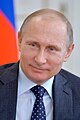

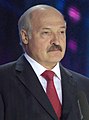


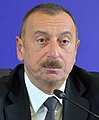

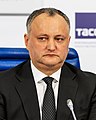


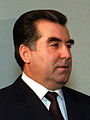


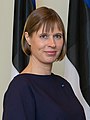


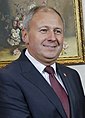


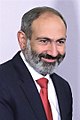


 Russian Federation
 Ukraine
 Belarus
 Uzbekistan
 Kazakhstan
 Georgia
 Azerbaijan
 Lithuania
 Moldova
 Latvia
 Kyrgyzstan
 Tajikistan
 Armenia
 Turkmenistan
 Estonia

